

By Handel Law Group · October 27, 2026
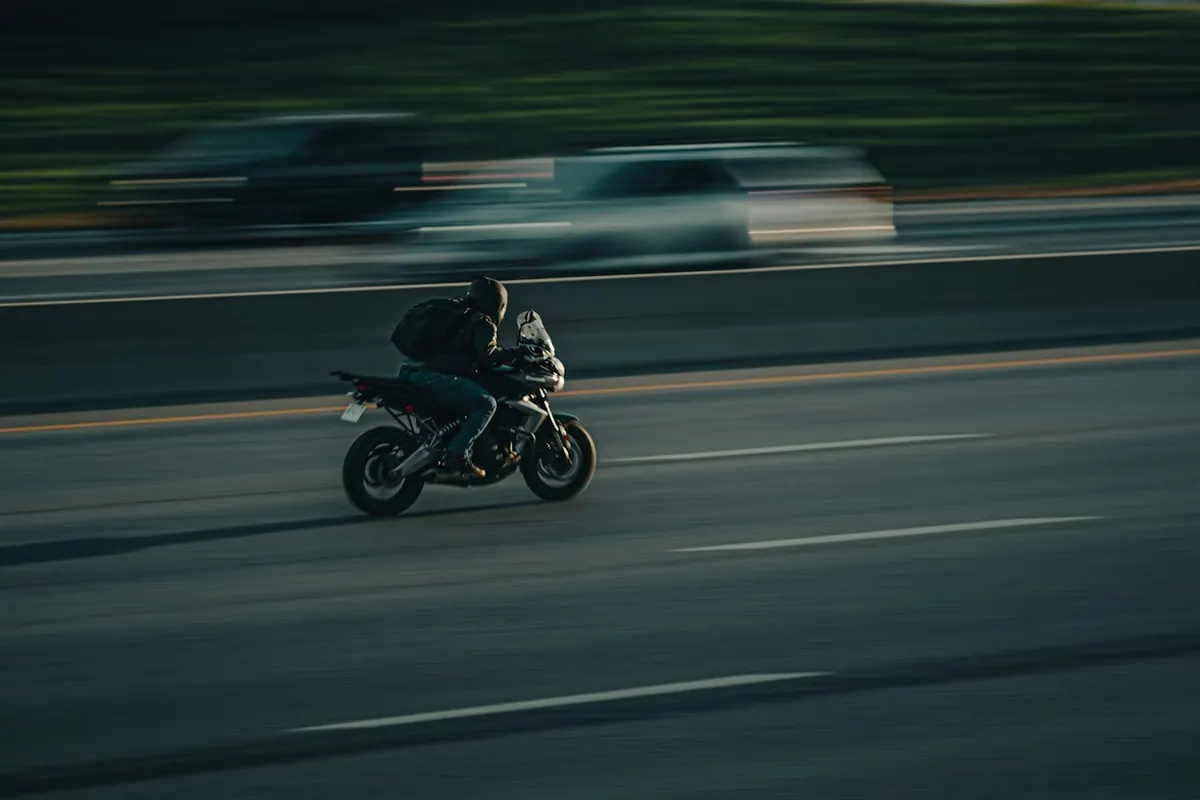
If you ride a motorcycle on San Diego freeways like I-5, I-15, or I-805, you have probably split lanes in slow traffic. California is known for allowing it, but many riders and drivers are still unsure what the law actually says. And after a crash, insurance companies sometimes try to blame the rider simply because they were splitting lanes. Here is what you should know.
Key takeaways
- Lane splitting is legal in California. It has been defined in state law since 2017.
- Being in the middle of a lane split does not automatically make a rider at fault for a crash.
- Fault depends on how everyone was driving, including speed, lane changes, and whether a driver was paying attention.
- Even if a rider shares some fault, California law may still allow a recovery.
What the law says
Vehicle Code section 21658.1 defines lane splitting as riding a two-wheeled motorcycle between rows of stopped or moving vehicles in the same lane. The law took effect on January 1, 2017, and allows the California Highway Patrol (CHP) to develop educational safety guidelines.
A few related points are worth knowing:
- Riding on the shoulder is not lane splitting, and the CHP says it is illegal.
- The CHP states that it is illegal for a driver to intentionally block or impede a motorcyclist in a way that could cause harm, including by opening a door.
- California law requires every motorcycle rider and passenger to wear a helmet that meets federal safety standards (Vehicle Code section 27803).
CHP safety guidance
The CHP's safety tips for riders who choose to split lanes include:
- Danger increases as the speed difference between you and traffic grows.
- Danger increases as overall traffic speed increases.
- Splitting between the far left lanes is typically safer than between other lanes.
- Avoid splitting next to big rigs, buses, and motorhomes.
- Stay out of blind spots and avoid lingering between vehicles.
- Lane splitting should not be done by inexperienced riders.
The CHP also asks drivers in the far left lane to move to the left side of their lane to give riders room.
These are safety tips, not laws. But insurance companies and courts may look at whether a rider was riding in a reasonably safe way under the conditions at the time.
Who is at fault in a lane splitting crash?
Every crash is different. Common lane splitting collisions include:
- A driver changing lanes without signaling or checking mirrors
- A driver making a sudden swerve or U-turn in slow traffic
- A passenger or driver opening a door into the rider's path
- A driver who intentionally moves over to block a rider
In cases like these, the driver may be responsible even though the rider was splitting lanes. On the other hand, if a rider was moving much faster than traffic, the insurance company may argue that the rider shares the blame.
California follows a "comparative fault" rule. If you are found partly responsible, your compensation may be reduced by your share of the fault, but you can still recover from other parties who were at fault. That is why it is important not to accept an insurance adjuster's quick conclusion that you caused the crash simply because you were splitting lanes.
Evidence that can help
Lane splitting crashes often come down to a few seconds of movement in heavy traffic. Evidence that may help show what happened includes:
- Helmet camera or dash camera video, from you or other drivers
- Photos of the vehicles, the damage, and where everything ended up
- Names and phone numbers of witnesses, including other riders
- The police or CHP collision report
- Your damaged helmet and riding gear, which should be kept, not thrown away
What we have seen in our cases
In motorcycle claims, adjusters often start from the assumption that a rider who was splitting lanes caused the crash. We have won several lawsuits for clients who were splitting lanes when they were hit. In those cases, what mattered was how the driver acted, not the simple fact that our client was riding between lanes. Past results do not guarantee a similar outcome, and every case depends on its own facts.
Talking to the insurance company
After a motorcycle crash, an adjuster may call quickly and ask how fast you were going or whether you were splitting lanes. Be careful. Your answers can be used to argue that you were at fault. It is usually wise to get legal advice before giving a recorded statement.
Also keep in mind that most California injury claims must be filed in court within two years of the crash, and claims involving a government agency have a much shorter deadline.
Talk with a San Diego motorcycle accident attorney
Handel Law Group is a family-run San Diego firm that has represented injured people throughout California since 1987. If you were hurt in a motorcycle crash, whether or not you were splitting lanes, we can review what happened and explain your options. Your consultation is free, and there is no fee unless we win.
Call us at 858.756.5195, or call or text our 24/7 line at 858.207.4677, answered by a real person. We can meet you at home or in the hospital, or by video or phone. Se habla español.
This article provides general information about California law, not legal advice. Every case is different.
Learn more: Motorcycle Accidents · Free consultation
This article provides general information about California law, not legal advice. Every case is different. For advice about your situation, call us for a free consultation.